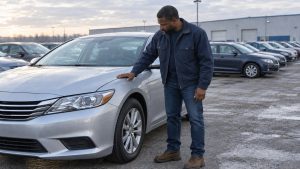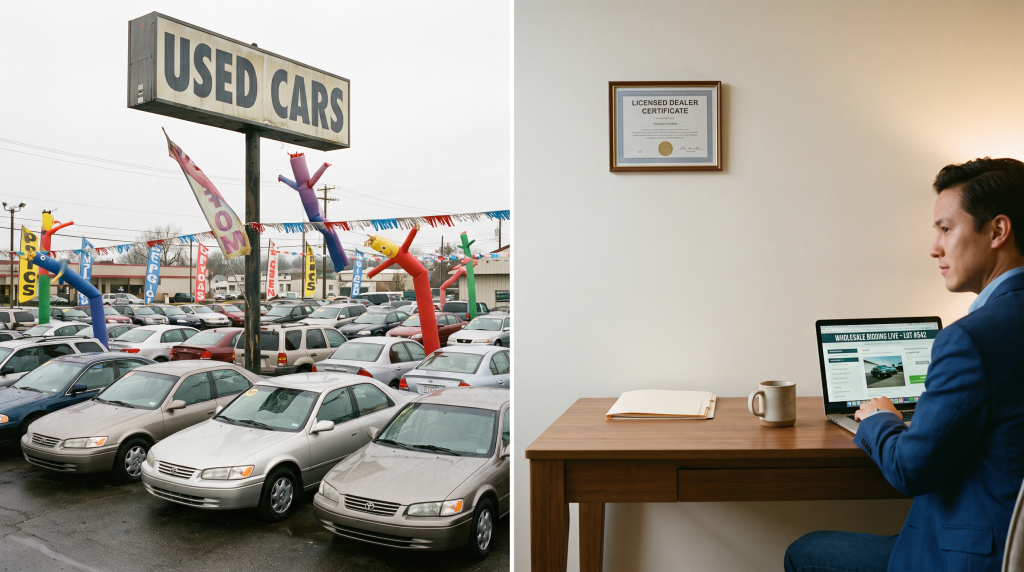
When people picture owning a car dealership, they picture a fenced lot lined with cars, a big sign out front, and a six-figure investment before you sell a single vehicle. That picture is outdated — and it’s the number one reason talented, capable people never start.
Here’s the truth: you don’t need “a lot” to own a dealership. Not a physical lot, and not a lot of cash.
The Old Model vs. the Real Requirement
Every state requires a business address to license a dealer, but that address doesn’t have to be a display lot with room for dozens of cars. State DMVs and licensing boards care about a few specific things:
- A verifiable, compliant business address (not a P.O. box, and in most states, not your home)
- A surety bond to protect the public
- Basic recordkeeping and office space
- Completion of pre-licensing education where required
Nowhere in that list is “own or lease a paved lot.” That requirement only shows up when you’re getting a retail license — the kind that lets you sell directly to the public off a display lot. If you’re getting a wholesale dealer license, the lot requirement disappears almost entirely.
What a Wholesale License Actually Gets You
A wholesale dealer license lets you buy and sell vehicles with other licensed dealers — through dealer-only auctions like Manheim, ADESA, and Copart, and dealer-to-dealer deals. No display lot, no showroom, no walk-in customers. Just a compliant office address and the paperwork to back it up.
The exact rules shift slightly from state to state, but the core trade-off is the same everywhere. We break this down in detail for one of our busiest markets in Florida Wholesale vs Retail Dealer License: What’s the Difference? — worth a read if you want to see the lot requirement, cost, and speed differences side by side.
That’s the trade-off, and it’s an important one: a wholesale license does not let you sell to the general public. It’s strictly dealer-to-dealer and dealer-to-auction. If your goal is flipping vehicles at auction, sourcing inventory for other dealers, exporting, or building relationships in the wholesale market, this is the exact license built for that — without the overhead of a retail operation.
The Real Cost Comparison
A traditional retail dealership with a compliant lot, signage, and display space can easily run $50,000–$200,000+ before you’ve bought your first car. A wholesale path looks completely different:
- No display lot to buy or lease
- No signage or zoning battle over parking spaces
- A compliant office address you can rent instead of build
- Licensing that typically takes 30–60 days instead of dragging on for 6–12 months when people try to figure it out alone
That’s the entire point of the wholesale route: it strips out the expensive, slow parts of opening a dealership and leaves you with what actually matters — a legal license and auction access.
The One Thing People Underestimate: The Address
Here’s where most first-time applicants get stuck. Even a wholesale license needs a real, verifiable business address — and in most states, your home doesn’t qualify. This single requirement is one of the most common reasons applications get delayed or rejected.
This is exactly the gap a rental office solves: a state-compliant address that satisfies your DMV or licensing board’s requirements without you having to sign a commercial lease or convert part of your house into a licensed workspace.
Real People Who Started This Way
This isn’t theoretical. On our Driving the Dream podcast, we’ve sat down with dealers who built real, sustainable businesses starting from exactly this position — no big lot, no massive capital, just a license and a plan. Rafael Godinez of Grand Motors got licensed in 2016 and is still running his wholesale business a decade later. Dan Robbins of CarProz built a 10-year wholesale operation the same way. Neither of them started with a display lot full of inventory — they started with a license.
How to Actually Get Started
- Pick your entity. Most people license as an LLC for liability protection.
- Secure a compliant address. This is the step people get wrong most often — verify it meets your state’s specific requirements before you apply.
- Get bonded. Your surety bond amount depends on your state.
- Complete any required pre-licensing education.
- Submit your application with all supporting documents in the format your state’s board expects.
Every one of those steps has a state-specific wrinkle that trips people up — which is exactly why doing it alone stretches into months. US Dealer Licensing handles the paperwork, compliance checks, and rental office setup so you’re not learning your state’s requirements through trial and error.
Bottom Line
You don’t need a lot of land, and you don’t need a lot of money. You need the right license, a compliant address, and a clear understanding of what wholesale actually allows. That’s a business you can start in weeks, not years.
Stop reading — start doing. What takes most people 6–12 months on their own, USDL handles in 30–60 days.